

Experience the natural wonders and one of the world's most extensive cave ecosystems
Welcome to Hin Nam No National Park, a natural wonder covering 94,121 hectares in southeastern Laos. This breathtaking protected area is a crucial habitat for diverse biodiversity, including some of the world's most mysterious endangered species, and a source of various natural ecosystems such as rich pristine forests, beautiful waterfalls, and complex cave systems, primarily the Xe Bang Fai Cave, one of the world's largest river caves.
Located in the central part of the Annamite Range with numerous steep limestone karsts, it borders Phong Nha-Ke Bang National Park in Vietnam. When combined, these two protected areas form the largest contiguous karst landscape in the world. The name 'Hin Nam No' translates to 'Limestone karsts with sharp peaks like bamboo shoots,' referring to the dramatic karst landscape formed over 300 million years.
Hin Nam No National Park was registered as a UNESCO Natural World Heritage site on July 13, 2025. This historic recognition was announced during the 47th session of the World Heritage Committee in Paris, France, marking it as the first Natural World Heritage site in Lao PDR and the first transboundary Natural World Heritage site in Southeast Asia, connecting with Phong Nha-Ke Bang National Park in Vietnam. You can read more details about the outstanding features of this park at About the Park
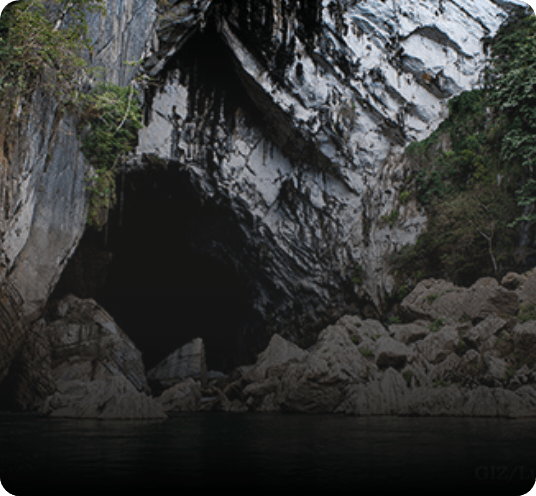
The main attraction of the park, formerly believed to be the origin of the Xe Bang Fai river and home to sacred spirits. Nearly 12km long, 76m high, and 56m wide, it is one of the world's largest active river caves.

The best way to reach the cave is a 1.5-hour longtail boat ride from Ban Pak Phanang to Ban Nong Ping, offering relaxing views of karsts, fields, and buffalo along the river.

The Houay Houk stream flows through three caves in the Ban Thongxam headwaters, with multiple trails leading into pristine forests and karst landscapes.

A loud and beautiful 80-meter high waterfall located between Bualapha town and Ban Nong Ping, accessible via a 30-minute peaceful forest walk.

The Mu Gia Pass is the legendary entry point of the 16,000km Ho Chi Minh Trail into Laos. You can still find historical remnants of the 'Secret War' in local villages.

A 20-meter high waterfall flowing year-round, accessible from Ban Nong Boua via the Ho Chi Minh Trail. Legend tells of two lovers who tragically jumped here.
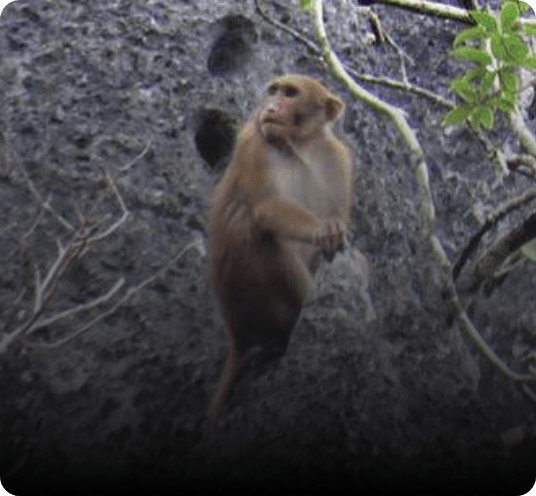
Take a short morning or evening trek from Ban Nong Saeng to Pha Kout to potentially spot the rare Hatinh langurs feeding or playing on the rocks.
Experience the natural beauty, majestic limestone karsts, and rich ecosystem through our visual collection of Hin Nam No National Park.


Explore the geography and key locations of Hin Nam No National Park using our interactive map.
Travel from Thakhek – Yommalath – Ban Langkhang (following the Thakhek Loop) – Overnight in Ban Langkhang.
Morning monkey watching at Pha Kout – Houay Houk trail – Overnight camping in the forest (requires advance booking) or return to Ban Langkhang.
Tad Song Chou waterfall – Ho Chi Minh Trail – Boat ride from Ban Pak Phanang to Ban Nong Ping – Overnight camping at the entrance of Xe Bang Fai Cave.
Explore Xe Bang Fai Cave – Tad Siang Leu waterfall – Return to Ban Langkhang or Yommalath to continue the Loop, or head back to Thakhek.
Visitors should always hire a local guide due to the risk of unexploded ordnance (UXO) from the war. Stay on marked trails, do not litter (including cigarette butts), do not take anything from the forest (like plants), never buy wildlife or illegal timber products, and do not make loud noises that disturb wildlife.